Posts

Presidential Election Psychology

This blog post is written on September 11, 2024, a day after the first Trump-Harris televised debate.  Private and public speculation has been frenzied and frantic.  Some have suggested or implied that the fate of America, even of the planet, will be determined by the presidential election—“the most important election in our history.”  Democrat and Republican partisans are employing every influence trick to nudge, scare, or bludgeon you to vote their way. I am not in that business.  Rather, I have a modest suggestion that is easier said than done: think, really think, for yourself.  Since neither you nor I have the time or expertise to parse every essential detail required to make the best voting decision, I limit myself to briefly discussing two related topics. First, let’s consider an often mentioned but rarely practiced mental activity – mindfulness.  Our simple working definition is mindfulness as your being aware of what is happening to you internally ...
Hypocrisy? Cowardice? in Psychology and Science

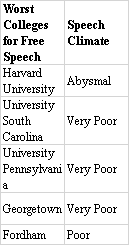
  Clinical psychologists explicitly or implicitly communicate to patients the importance of their speaking as honestly and completely as possible, especially when asking and answering questions.  And, expecting honesty and completeness, non-clinical psychologists regularly use surveys of various sorts to conduct their research. Given that honest and complete communication often requires courage and resolve, Cory J. Clark and colleagues (2024) wondered whether psychologists had sufficient grit and conviction to follow their own advice.  Their study was important because the psychologist-participants were university professors-- meaning that they profoundly influence the current and future direction of psychologists, psychology majors, and students of all other majors enrolled in their classes. The candidate professors taught at “the top 100 universities and the top 100 psychology graduate programs in the United States according to U.S. News & World Report rankings...

Homeostasis and Allostasis

Virtually everyone is familiar with homeostasis.  To refresh that concept: it refers to the fact that a healthful physical condition must be maintained within a narrow range regardless of the external environment  wherein we find ourselves.   Among  the many processes to be maintained are those such as temperature control, pH balance, and glucose levels.  Not so widely known,  however, is the allostasis concept—the process by which the body regains homeostasis when homeostasis is challenged or lost due to stress.  Some of the stressors are purely physical, such as frigid weather and some are less so, such as angry disputes.  Most stressors, of course, include an amalgam of physical and non-physical stress (e.g., mental) in various combinations.  Unlike homeostasis, allostasis operates by ANTICIPATING increased bodily demands and challenges.  For instance, allostasis begins to operate long before your body temperature has deteriora...

Swallowed In and Excreted Out: Miseducating Americans

Image
  In the not-too-distant past, there was a common perception of a young person’s transition from high school graduation to higher education. The newly liberated ex-high-schooler was believed to leave 12th grade with an excessively limbic, subcortical operating system dominated by raging hormones and rebellious mindsets. Then, learned implacably rational professors performed pedagogical brain interventions that stimulated the prefrontal cortex such that it eventually surged into prominence, resulting in higher education graduates who could and did employ independent rationality to reach critical life decisions.  Given the current 21 st  century state of higher education, however, I have transformed my higher education neurology-brain metaphor to an gastrological-alimentary one.  Contemporary higher education students are not stimulated to frontal lobe engagement by their universities.  Rather, the hapless victims are consumed by universities that extract student ...

Stone-Aged Living

Recently, on the Mediterranean island of Malta, I lay my left hand on a multi-thousand year old megalith while holding a 2024 mobile phone in my right. And I wondered about the people and lifestyles responsible for both.  The Megalith Builders of Malta lived approximately in 3000 BC—during the New Stone Age— on an island 17 miles long and 9 miles wide.  Since the island had no known volcanos, the air presumably was relatively pure.  The natural environment contained mammals, such as red deer, wild boar, rodents, and sea life, such as fish, dolphins, and seals. The fabricated environment was created through the efforts of small family- and kin-based groups.  Using stone tools, animal bones, and wood, the inhabitants  created what arguably are among the oldest megaliths on earth, consisting of a series of large stone blocks, some weighing several tons. They sustained themselves through farming, herding, and fishing. In short, the world of the neolithic Maltese req...

That's a Strange Idea

What does that have to do with what we were talking about?  We all have presented or thought about presenting that question to someone.  The implicit “accusation” is that we believe our interlocutor has found relevance where none exists, or that they are ascribing more relevance to their idea than is warranted.  In psychology jargon, the former would be called “aberrant salience” and the latter, “anomalous salience.”   We might then dismiss the speaker as being emotionally or cognitively deficient. So, one more question: Is such thinking crazy?  Aberrant salience, by definition, is deficient.  In fact, it is often regarded as a common feature of thought on the schizophrenia spectrum.  But anomalous salience is not necessarily deficient; in fact, it literally could lead to a so-called quantum leap in human knowledge.  For instance, in 1935, Erwin Schrödinger combined the ideas of subatomic particles (quanta) with influence distance, to describ...

Aspiring to Self-Curated Thinking

Let’s assume that you aspire to independent thought. That aspiration is not automatic; it presumes metacognition – thinking about your thought process.  And a willingness to put forth the effort necessary for independent thought in our culture that relentlessly assails you with propaganda and other forms of manipulation. Among the elements essential for independent thought, I offer two.  First consider your frame of reference.  What is it about you, the topic, and any potential receiver of your information that provide the contexts for your communication?  Among other things, those factors will determine the ideas that come into your mind, the words that you choose, and the conviction and passion with which you entertain and deliver your thoughts.   Second, what sources and other particulars of objective data guide you?   Have you gathered relevant base rate information?  That is, information which provides as much reasonably valid relevant i...